Indonesia's economy cools, more room for looser policy seen
Bareksa • 07 Jan 2014
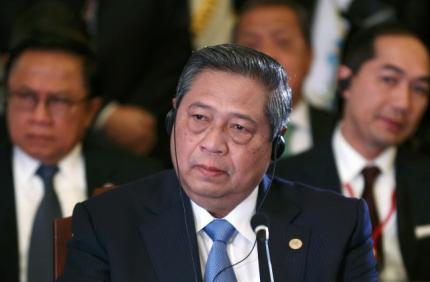
President Yudhoyono attends the first session of ASEAN-Japan Commemorative Summit Meeting in Tokyo (REUTERS/Toru Hanai)
Indonesia 2013 growth seen at 5.7 pct - finmin
Reuters - Southeast Asia's largest economy may have cooled to its weakest in four years as activity dropped sharply late in the year, suggesting that Bank Indonesia could loosen its tight monetary stance in the coming months.
The economy is expected to have expanded 5.7 percent in 2013, bolstered by strong domestic consumption and government spending, Finance Minister Chatib Basri said on Monday. Gross domestic product grew 6.23 percent in 2012.
On a quarterly basis, the economy contracted 1.4 to 2.0 percent in the fourth quarter from the third, he said.
"Leading indicators in Q4 showed loan growth started slowing, a decline in cement sales, a slow down in imports of capital goods and a decrease in oil lifting," Basri said.
He also said the current-account deficit, which has been a major worry for investors, would be 3.5-3.7 percent of GDP in 2013 and decline to 2.7-3.2 percent in 2014.
"The policy taken by the government since August to ease the current-account deficit has shown results," Basri said.
The moderation in economic growth was seen in line with the government's and Bank Indonesia's efforts to rein in domestic consumption and imports.
"We concur with the government's expectation because external trade conditions have not improved due to exports which are still weak, and imports on the other hand, have not decreased despite the rupiah's depreciation," said Arga Samudro, economist at Bahana Securities in Jakarta.
Since June, the central bank has lifted its key reference rate by a total of 175 basis points to 7.50 percent, in a bid to shield the G20 economy from overheating amid concerns over a ballooning current-account deficit.
Analysts said the improved data gives Bank Indonesia some leeway to ease monetary policy in the second half of the year. Markets may also take comfort when a new administration is in place after presidential elections in July.
"With inflation at 5-6 percent, BI has sufficient room to cut rates if the rupiah strengthens on capital inflows after election results. BI could cut its rates without sacrificing the rupiah or the current account," said Jakarta-based economist for BII, Juniman.
He added the central bank could raise its reference rate by 50 basis points in the first half and cut the rate by the same amount in the second half.
The rupiah was Asia's worst-performing currency last year, losing more than 20 percent to the dollar on worries over Indonesia's vulnerability to capital outflows when the Federal Reserve scales back its stimulus.
For the July-September quarter, the country posted a current account deficit of 3.8 percent of GDP, easing from a record-wide gap of 4.4 percent the previous quarter.
Indonesia expects to post a surplus in its current account balance in the final quarter of 2013 due to improvements in trade.
The Jakarta Composite Index closed down 1.3 percent on Monday, led by selling in large cap shares.